Microsoft Has Never Been For Me. We're Switching Anyway.
I avoided Microsoft for 20 years. We just switched 119 people to Microsoft 365.
Not because Microsoft got better. Because simplification matters more than preference at scale.
I’ve spent most of my life building with companies that share my values. Apple. Google. Companies that believe in craft, in attention to detail, in building things that are beautiful and functional. Microsoft has always felt like the opposite - dominant, but not inspiring. Built to shift boxes, not to be crafted.
Then last month, we decided at board level to migrate all 119 employees from Google Workspace to Microsoft 365 over the next three to six months. And I can’t quite believe I’m saying this: it’s the right decision.
This is the story of why I fell out of love with Microsoft, how I became a Mac and Google devotee, and why - after a decade of running circle.cloud - I’m about to make peace with a company I once rejected entirely.
The Windows Years
I discovered computers around 1999, aged 10 or 11. My mum worked at an English school in Lloret de Mar that had computer labs. I learnt to touch-type using ancient software that displayed letters on screen whilst I hammered away without looking at the keyboard. I was obsessed.
By 12, I wasn’t just learning Word and PowerPoint. I was learning how Windows itself worked - where kernel files lived, what FAT32 and NTFS meant, how to format drives and reinstall operating systems from scratch. I built computers from components: RAM modules, hard drives, motherboards, chassis. I’d watch the BIOS boot up, configure it manually, then install Windows.
My goal wasn’t to become a computer enthusiast. It was to build powerful machines for my recording studio. Music production was the passion; computing was the tool.
But even then, Windows frustrated me. Pop-ups. Constant interruptions. Updates that derailed focus. Menus buried inside menus. It felt chaotic, like the product of a corporation optimising for market share rather than user experience.
The Mac Conversion
Then I used a Mac.
A family friend had one of those black PowerPC laptops. When I got my hands on it, everything changed. The operating system felt calm. Intentional. It didn’t interrupt you with nonsense. Applications stayed running even when you closed their windows - a design decision that made perfect sense but had never occurred to me on Windows.
The small choices felt right. The structure felt elegant. It just worked.
I asked my parents for a Mac. They found a secondhand white iBook on eBay. That machine remains one of my favourite laptops ever, not because of specs, but because of what it represented: a shift from fighting my tools to using them.
I heard later that the Mac startup sound - that iconic chime - was inspired by the final chord of The Beatles’ “A Day in the Life”. Jim Reekes, Apple’s sound designer, recorded it as a C-major chord in his living room. This is craft. This is attention to detail that Microsoft simply didn’t demonstrate.
I became a Mac person. I converted my entire home studio to Macs. Multi-track sessions with 20+ tracks and effects that would’ve made a PC collapse ran smoothly on old Intel-based Mac Pros. Those aluminium machines - the ones Steve Jobs unveiled before the cheese-grater design - were beautiful inside and out. Apple cared about how the internals looked, even though most users would never open them. Can you imagine Microsoft doing that?
Building a Business on Google
When I founded circle.cloud in 2015, I built it as a Mac house from day one. I bought 10 secondhand Mac Minis and old Cinema Display monitors off eBay. That’s all I could afford.
For productivity software, I chose Google Apps for Business (now Google Workspace). Gmail, Drive, Calendar, Docs, Sheets. The entire suite. I also chose Slack for internal communications.
The decision was easy: it wasn’t Microsoft, and Apple didn’t offer an equivalent business suite. Google felt like the outlier. The innovator. The company that said “we’ll give you search results in under a second” when that was unheard of. They built with simplicity. They shared values I respected.
But there was a problem from the start.
I needed to build a quoting mechanism for our sales team. A workbook that allowed us to input customer details, generate quotes as PDFs, and create contracts - all offline, because field sales reps visiting customers often had no internet access.
I tried Google Sheets. The permissions system couldn’t restrict cells the way I needed. Offline functionality didn’t exist back then. The only tool that worked was Microsoft Excel.
So from day one, we ran both Google Workspace and Office 365. We had to buy Microsoft licences for the sales team whilst everyone else used Google. It was messy, but unavoidable.
The Chaos of Growth
Fast-forward to 2025. We’re now 119 people. I’ve hired a CEO to replace myself. We have an executive board, senior management, middle management. The company has grown beyond my ability to oversee every decision.
And our software ecosystem is a disaster.
We use:
Xero for accounting
Zoho Expenses and Zoho Books (also for accounting)
Zoho CRM as our central database
Zoho Analytics for reporting
Plecto for analytics
Geckoboard (previously, also for analytics)
Power BI and Power Query (more Microsoft creep)
Zoho Projects for project management
Basecamp (which we barely use now, though I love the product and respect 37signals)
Zoho Cliq (tried as a Slack alternative - glitchy and inferior)
Slack for internal messaging
Google Workspace for productivity
Office 365 for sales and certain users
SharePoint (some departments adopted it independently)
Google Drive (other departments use this instead)
Information is siloed. When people leave, we discover drives and folders we didn’t know existed. Departments are using different tools for the same jobs. It’s fragmented, inefficient, and unsustainable.
This is what happens when you don’t enforce IT policy early. If you’re at 20 people, listen: decide now what tools your company uses. Stick to it. Make it non-negotiable. We should have done this at 30 people. We’re doing it now at 120, and it’s far more painful.
Why We’re Choosing Microsoft
We had to simplify. The decision came down to: go all-in on Google, or go all-in on Microsoft.
We’re choosing Microsoft. Here’s why.
1. Excel dependency We still rely on that sales quoting workbook. It runs on Excel. We’re building a bespoke offline application to replace it, but it won’t be ready for six to twelve months. We can’t wait.
2. SharePoint vs Google Sites We need a proper intranet. Google Sites doesn’t match SharePoint’s capabilities. SharePoint isn’t beautiful, but it’s more powerful for what we need.
3. Leadership familiarity Our operations director, Russ, comes from a Microsoft corporate background. He’s spearheading this simplification. It makes sense for him to lead with tools he knows deeply.
4. Customer alignment circle.cloud now provides IT support services to small businesses alongside telecoms. Over 90% of our customers use Microsoft 365. We’re also a Microsoft reseller. Our team needs to live in the ecosystem we support.
5. Device management We need mobile device management (MDM) across Windows, Mac, and soon Linux. Microsoft’s tooling integrates better with this multi-platform reality.
It isn’t about falling in love with Microsoft. It’s about pragmatism. Simplicity. Operational clarity.
We’ll be migrating everyone over the next three to six months. It’ll be painful. But it’s necessary.
What I Still Won’t Use
I’m making one exception for myself: I won’t use Outlook or Outlook Calendar once we migrate.
I use Hey Email (from 37signals) and Apple Calendar. They work perfectly with Office 365, and I’m not giving them up. Call it stubbornness, but when you find tools that feel right, you don’t abandon them for corporate alignment.
Everyone else in the company will use Microsoft once we complete the migration. That’s the policy. And I’m fine being the exception, partly because my operational role has reduced now that we have a full-time CEO.
The Microsoft Teams Question
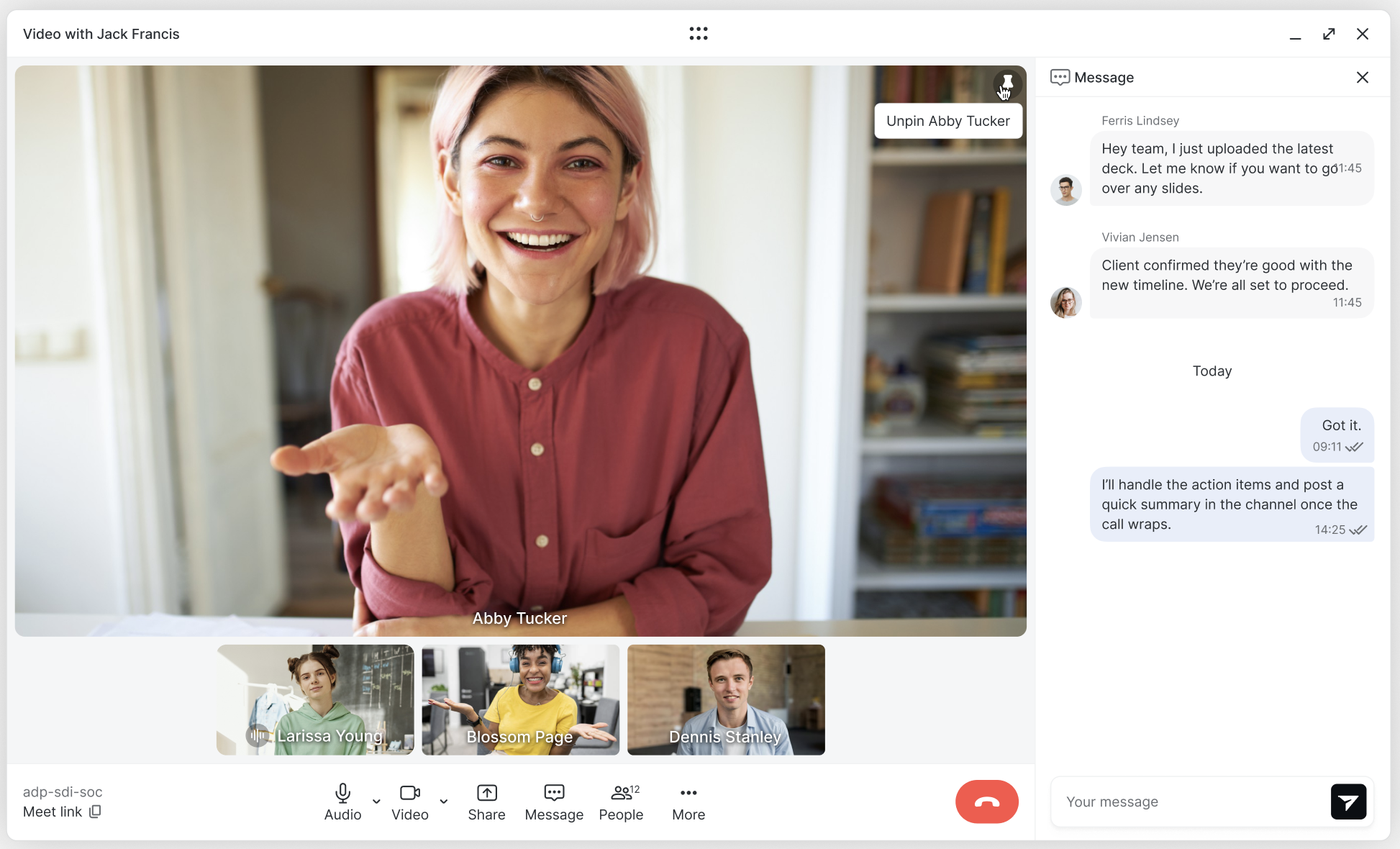
Here’s where I’m genuinely curious: does anyone actually like Microsoft Teams?
Every person I’ve spoken to dislikes it. They find it slow to connect calls. Bulky. Laggy. Unintuitive. It lacks the craft and attention to detail I’d expect from a great unified communications platform.
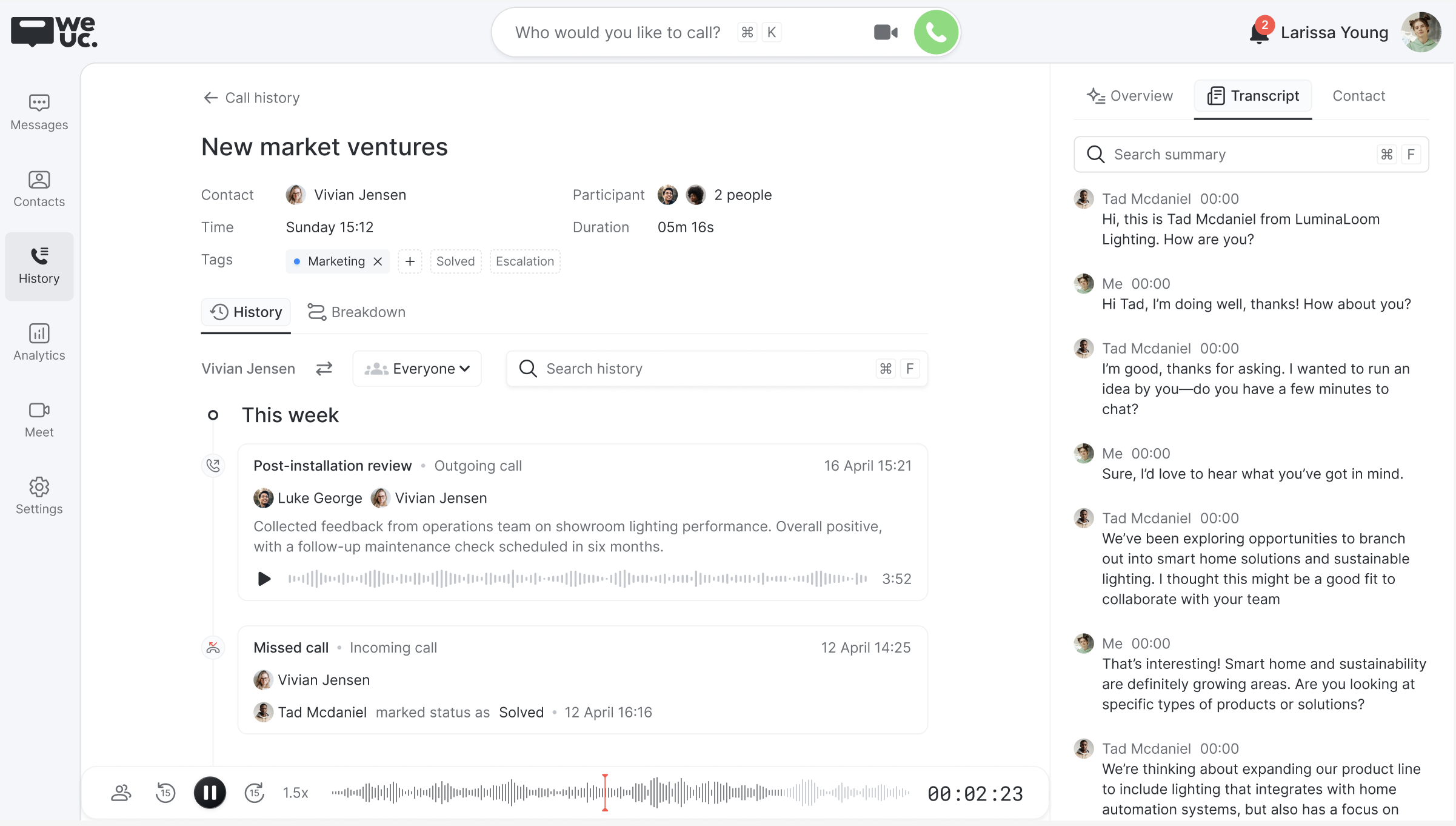
This is one of the reasons we built We UC. We wanted something with the speed and simplicity of the best tools, but with deeper integration: telephony, video, messaging, file sharing, call analytics, business intelligence. All in one place, built with care.
We UC MeetingWe UC Call History
If you love Teams, I’d genuinely like to hear why. Comment or message me. It’ll inform how we develop We UC going forward.
Taste matters. I still believe that. Microsoft still lacks the craft I see in Apple products or the simplicity I admire in Google’s best work.
But pragmatism also matters. At a certain scale, businesses need consolidation. They need systems that work across teams, that integrate with customer ecosystems, that reduce complexity rather than add to it.
I’ve learned that you can hold two truths at once: Microsoft’s products aren’t beautiful, but they might still be the right choice for your business.
And that’s where I am now. Not in love. But at peace.
If you’re building a company and facing similar decisions, here’s my advice: decide early what your IT stack will be. Enforce it. Don’t let teams adopt tools independently just because they’re familiar with them. Fragmentation costs you more than you realise.
Simplicity beats perfection. Even if the simpler choice isn’t the one you’d prefer personally.
Want more behind-the-scenes thinking on building businesses and choosing tools? Join the newsletter.
Subscribe to our newsletter.
Become a subscriber receive the latest updates in your inbox.
You might also like
Feb 28
The State of AI Right Now
AI is no longer a single chatbot but a layered stack of thinking, building, doing, and creative tools, and once you understand that map, choosing the right tool for your business becomes obvious.
8 min read
Feb 21
The Gift That Opened Everything
The question I carry as a parent is whether curiosity still ignites in a world where the answers arrive before the questions are fully formed.
6 min read
Jan 31
Who I Am and Why I Am Building This
This is the story of building circle.cloud from 200 cold calls a day to 100+ employees and nearly £20m in revenue, why I hired a CEO to replace myself, and what I'm building next with We UC.
6 min read
Jan 26
Motivation Is Perishable
My father could build anything, as long as the motivation lasted. This piece reflects on what he finished, what he didn’t, and how that shaped the way I think about timing, momentum, and starting before the urge fades.
4 min read
Jan 18
The Mobile Phone: My Journey and the Future
From a Nokia 5110 I couldn't afford a SIM card for, to running a telecoms company. 25 years of mobile phones taught me: features don't win. Experience wins.