The Future Is Already Here
The cost of energy, software, and services is trending toward zero. Here is why that changes everything, and what it means for the future of technology.
There is a theory that the cost of almost everything is heading toward zero. Energy. Goods. Services. Software. And I think there is truth to it.
Not that things will literally be free. But that we are entering a period of such abundance that the cost of creating, delivering, and consuming drops so dramatically it changes everything. We are already living in an abundant world. What is coming is excessive abundance - where anything you need is available to you at any moment.
And I have seen enough over the past few years to believe this is not far off.
Start with energy. If energy gets cheap enough, it changes the cost structure of everything downstream.
Nuclear fusion - the safer, cleaner version of nuclear power that does not produce long-lived radioactive waste - is making genuine progress. Unlike fission, which is what current nuclear power plants use and comes with the risks of chain reactions and waste storage, fusion is inherently safe. The reaction cannot run away. It simply stops when conditions are not right.
Combine that with solar. Not just panels on rooftops, but solar panels in space. Japan has already demonstrated the concept - generating electricity in orbit and beaming it back to Earth using lasers and microwaves. Companies like Aetherflux and StarCatcher are planning commercial demonstrations this year.
Space-based solar captures sunlight 24 hours a day with no weather interference. If you can transmit that power efficiently to ground stations, you unlock a fundamentally different energy equation.
When energy becomes cheap and abundant, the cost of manufacturing drops. The cost of transport drops. The cost of computing drops. Everything sits on top of energy.
Think about where we are right now with delivery and convenience. If you live in a city and need something - a shaver, a phone charger, anything - you can open an app and have it at your door in under an hour. I have experienced this in Dubai, where the service is a step more evolved. Delivery comes to the door of your flat, through your apartment block, straight to you.
We consider this impressive now. But fast forward five years.
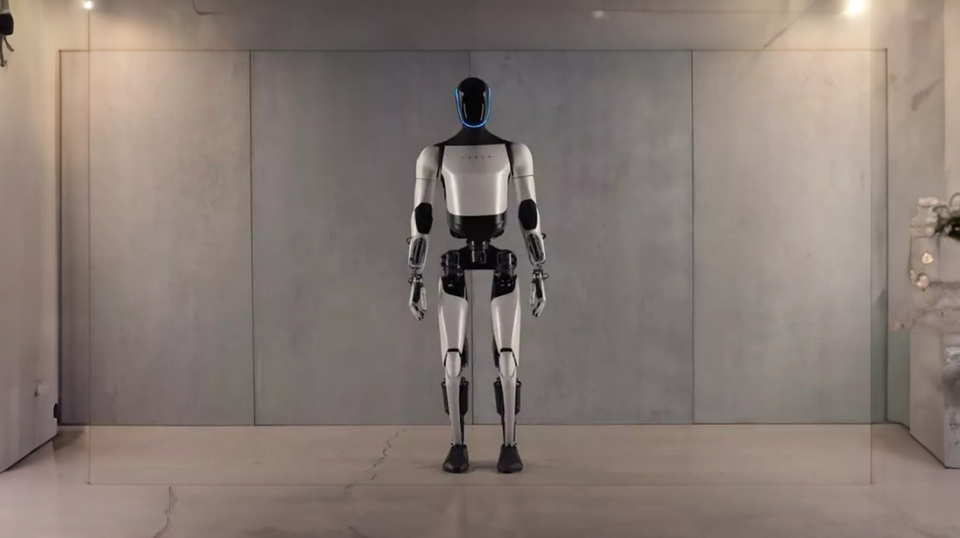
Drone deliveries. Self-driving vehicles. And robots - which sounds science fiction, but the technology is already here.
Physical AI is what this is called. Robots that use artificial intelligence to navigate the real world. They see through cameras. They process their environment in real time. They make decisions the way a human would, but faster and without fatigue.
I was recently in Miami and had my first experience in a self-driving car. The car was parked on a busy road. The driver - or rather the person in the driver's seat - entered the address. And the car manoeuvred out of the parking space, joined the main road, and navigated itself for twenty minutes through busy streets and highways.
It handled everything. A cyclist - moved around it smoothly. A bus pulling in - indicated and overtook. A car ahead going slowly with no indication of what they were doing - the self-driving car waited, assessed the situation, then safely changed lanes and continued.
It was impressive. Not in a gimmicky way. In a genuinely functional, this-is-the-future way.
There is a debate in autonomous driving that I find fascinating. Tesla has bet everything on cameras and software - no lidar, no radar sensors. Their approach is to make the car see the way a human does, using neural networks to interpret visual data.
Other manufacturers like Waymo have gone with cameras plus sensors - lidar, radar, and other hardware. A belt and braces approach.
I understand the logic of the software-only bet. If you write great software with strong neural networks, you have an advantage. The cost of manufacturing is lower with cameras only. And in theory, if humans can drive with just vision, machines should be able to as well.
But there is a practical concern I keep coming back to. Visibility.
In rain, snow, or mud - what happens? Humans can wipe their eyes. We can put the windscreen wipers on. We maintain our own visibility. But a camera covered in water droplets or mud cannot do that by itself. Tesla has heat pads around cameras to melt snow, but heavy rainfall or mud is a different challenge.
Maybe nanotechnology solves this. Maybe self-cleaning coatings become standard. But until then, I suspect self-driving will require clean cameras to engage - and getting out to wipe your cameras down is not exactly the seamless future we are imagining.
These are solvable problems. But they need solving before autonomous driving becomes truly ubiquitous.
What excites me more than any single technology is artificial intelligence. Because I have experienced its impact firsthand.
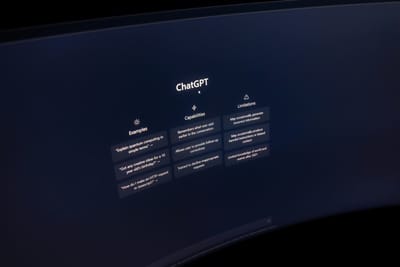
In November 2022, when ChatGPT launched, something unlocked for me. I had always been the person who wanted to figure things out. When our phone system at circle.cloud lacked a built-in dashboard, I wanted to build one. I knew we had shell access to the MySQL database. I spent hours on Stack Overflow learning how to write queries to extract the data I needed.
But I did not have a tool where I could simply describe what I wanted and receive the exact query in response. That tool did not exist.
When GPT arrived, it gave me exactly that capability. I could describe what I needed in plain text and get back working code. It was a breakthrough.
That led to writing shell scripts - something I had always wanted to do but never properly learned. Which led to something bigger.
We had a longstanding problem in our business. Our telemarketing team books appointments for field sales people, and those appointments need to be logistically viable - no more than an hour's drive between meetings. With seven field sales people, managing this manually was becoming unworkable.
So I built The Scheduler. I started by writing a script that used the Google Maps API to calculate drive times between postcodes. When that worked, I thought: can I turn this into an actual application?
Using ChatGPT and later Claude, I built it into a fully fledged app. Tens of thousands of lines of code. User management. Appointment workflows. Stripe integration for payments. A self-service website at scheduler.so where customers can sign up, start a free trial, and be operational in minutes.
I did not write a single line of code myself. I cannot write code. I can read it, understand it, but my syntax would be wrong if I tried to write it from scratch.
The application was submitted to the Zoho CRM Marketplace. They spent two months reviewing it. They approved it. A fully vibe-coded application, built entirely with AI, accepted into a major CRM marketplace.
That is the moment I realised the scale of what is happening.
If a non-technical founder can build a production application from scratch using AI, others will do the same. People with ideas who previously lacked the funds or technical ability to implement them now have the capacity to create.
This is both exciting and disruptive.
I think the era of generic SaaS is ending. Software will become incredibly specific rather than broad. Purpose-built applications for precise use cases, rather than bloated platforms trying to serve everyone.
I was speaking to someone recently who wants to build a gym tracking app with a social network component. He did some market research before building anything and found someone had already built almost the exact same application with the exact same name he had planned to use.
That is not coincidence. It is a pattern. People who have carried ideas for years can now execute them. The flood of micro-applications is coming.
Tools like Salesforce will struggle in this new world. Not because they are bad, but because the economics of purpose-built software are fundamentally different when AI removes the development barrier.
And looking further ahead, I think applications could eventually be created on demand. Not immediately. But in the semi-near future, you might describe what you need and have a purpose-built tool generated for you.
What makes this moment unique is not any single technology in isolation. It is the convergence.
Cheap energy makes computing cheaper. Cheaper computing makes AI more powerful. More powerful AI makes software creation accessible. Accessible software creation drives an explosion of tools. Physical AI brings intelligence into the real world. Self-driving, robotics, and drone delivery reshape logistics.
Each of these feeds into the others. The compounding effect is what drives costs toward zero and abundance toward excess.
I am not claiming to have all the answers about where this leads. Nobody does. But I have built a production application without writing code. I have sat in a self-driving car that navigated city streets better than most human drivers. I have watched energy technology make progress that seemed impossible a decade ago.
The future is not something we are waiting for. It is something we are already living in.
The question is not whether these changes are coming. It is whether you are paying attention.
Become a subscriber receive the latest updates in your inbox.